

Correction of Misstatements Regarding Corridor Humidity and Required Board Action
Dear Board Members and Fellow Owners, by Arkady Chase
I am writing to correct several significant inaccuracies contained in Mr. Weinstein’s recent public post regarding the North Tower corridor humidity problem. Because his comments were published on AquariusUno.com, it is necessary to provide owners with accurate information and to clearly outline the Association’s obligations.
Although Mr. Weinstein resides in the South Tower, he made assertions about conditions in the North Tower, where the humidity problem has been persistent, documented, and directly experienced by residents.
1. The North Tower did not have persistent humidity problems before the 2015 HVAC installation For more than forty years prior to the installation of the current rooftop HVAC system (installed around 2015), the North Tower corridors did not experience sustained humidity issues. The elevated humidity began only after the current system was installed. This is a matter of building history, not opinion.
2. The Association has a non‑discretionary legal duty to correct HVAC failures Under Florida Statute §718.113, the Association must maintain, repair, and replace common‑element HVAC systems. This duty is mandatory. It is not subject to owner votes, feasibility studies, or cost‑avoidance arguments. If the corridor HVAC system is failing, the Board is legally required to correct the failure.
3. Modern humidity standards apply to the 2015 system The suggestion that modern humidity‑control standards do not apply because the building is 53 years old is incorrect. When HVAC equipment is replaced—as it was in 2015—the replacement system must meet current operational performance standards. These are not “new‑construction standards”; they are basic requirements for any functioning mechanical system.
4. The issue is humidity, not temperature The corridor temperature being 75–80°F is irrelevant. Humidity and temperature are independent variables. Documented humidity levels in the North Tower corridors have been around 70%, exceeding ASHRAE 62.1 recommendations and building‑science thresholds for mold risk. The system is failing at dehumidification, not cooling.
5. The explanations offered in the blog post are technically incorrect Several claims made in the post do not withstand engineering scrutiny:
- Stairwells have been unconditioned for 53 years and never caused humidity problems before 2015.
- Ductwork has not changed since construction and did not cause humidity for four decades.
- Unit thermostat settings do not increase corridor humidity.
- Residents occasionally leaving doors open cannot explain humidity levels that persist 24 hours a day.
- The real issue is the 2015 rooftop system, which was apparently not properly designed, selected or maintained for corridor humidity control.
6. The system was non‑functional for nearly 10 months Approximately two years ago, the corridor HVAC system was out of service for almost 10 months, with the Board and management repeatedly stating they apparently were “waiting for parts from Canada.” This prolonged outage significantly worsened humidity conditions and demonstrates a failure to maintain the system as required by law.
7. The $7 million cost narrative is misleading and unsupported The suggestion that humidity control requires a $7 million overhaul is not supported by any engineering report. Humidity control does not require new chillers, new ductwork, stairwell air‑conditioning, structural modifications, or multi‑million‑dollar redesigns. It requires the Association to repair or replace the failed rooftop HVAC equipment installed in 2015. Presenting extreme cost scenarios only serves to confuse owners and delay necessary action.
8. Government authorities investigate failures, not “complaints” If the City or DBPR becomes involved, it is because humidity exceeds safe limits and the corridor HVAC system is not functioning. Authorities investigate building conditions, not personalities. The implication that owners should avoid involving authorities is inappropriate and contrary to the purpose of regulatory oversight.
Required Board Action The steps the Board must take are straightforward and long overdue:
- Conduct a proper diagnosis of the failed rooftop HVAC system installed in 2015.
- Repair or replace the components responsible for inadequate dehumidification.
- Restore corridor humidity to safe levels (below 60%) as required by accepted standards.
These actions are not optional. They are statutory obligations.
Why This Matters to All Owners High humidity causes mold risk, corrosion, deterioration of finishes, increased electric bills, and shortened lifespan of in‑unit AC systems. This is a building‑health issue affecting every owner, not a matter of personal preference.
I welcome factual, engineering‑based discussion. However, the community must rely on accurate information. The North Tower humidity problem began only after the 2015 HVAC installation, persisted during a 10‑month system outage, and continues because the system is not performing its required dehumidification function. The Board must address this failure without further delay.
Respectfully,
Arkady Chase, PH5N
.o0o.
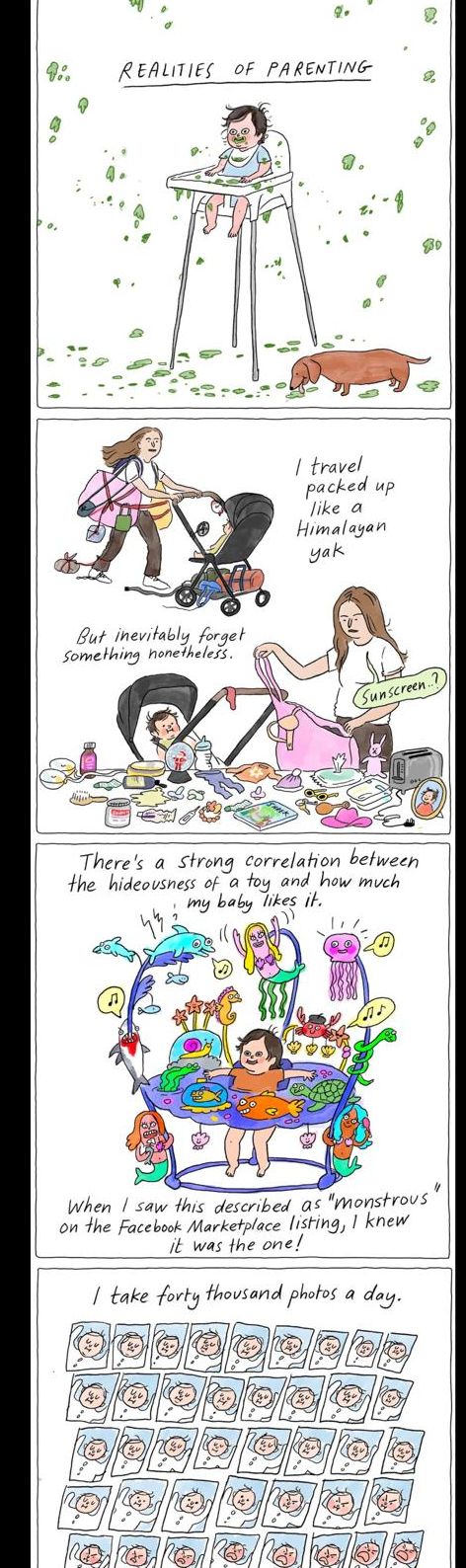
Realities of Parenting:
by Edith Pritchett, Washington Post, July 2026
.o0o.


901N Residn
Dear Arkady, thank you very much for your articulate, intelligent, and detailed letter. I am simply amazed—how is it even possible to write such things in response to your letter? How can anyone talk about the cooling of the emergency exit stairs? After all, they are directly exposed to the outside air. I have lived in this building for over 20 years; the corridors were always cool, and it was pleasant to return to that cool air after a hot day at the beach. Yes, indeed—everything changed after 2015.
Your unbiased and well-reasoned letter demonstrates a deep interest in the life of our condominium.
LikeLike