

Tip of the Iceberg: How Aquarius Board and Management Are Letting the Building fall into Disrepair
Live electrical hazards. Broken staircases. A decommissioned restroom instead of a repaired one. These are not isolated incidents — they are a pattern of willful neglect by those entrusted with our safety and our property values.
by Dr. Philippe Cooper, 1603N April 2026
Every condominium owner in this building has paid assessments, followed the rules, and trusted that the Board of Directors and property management would do their jobs. That trust has been broken — not once, not twice, but repeatedly, and in ways that now pose direct physical danger to residents, guests, and employees.
What you are about to see is not the full picture. It is, as the saying goes, merely the tip of the iceberg. The three incidents documented below were formally brought to the attention of the Aquarius Board and management. In each case, the response ranged from silence to a solution that made things worse. The photographs speak for themselves.
“These deficiencies were reported. The Board and management knew. Nothing meaningful was done.”
Exhibit 1 — Energized electrical panel dangling from live wires
| LIFE SAFETY HAZARD — EXHIBIT 1
A fully energized electrical outlet box found dangling from its wiring with live terminals exposed and accessible to residents and visitors (over 24 hours in this state). This is a direct electrocution risk and a violation of the Florida Building Code and NFPA 70 (National Electrical Code). This condition was reported to management. |
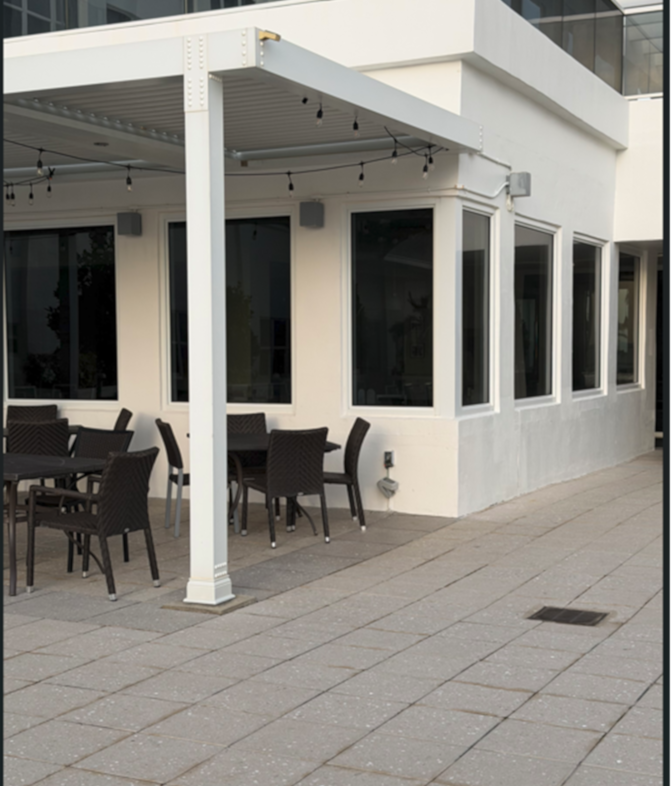
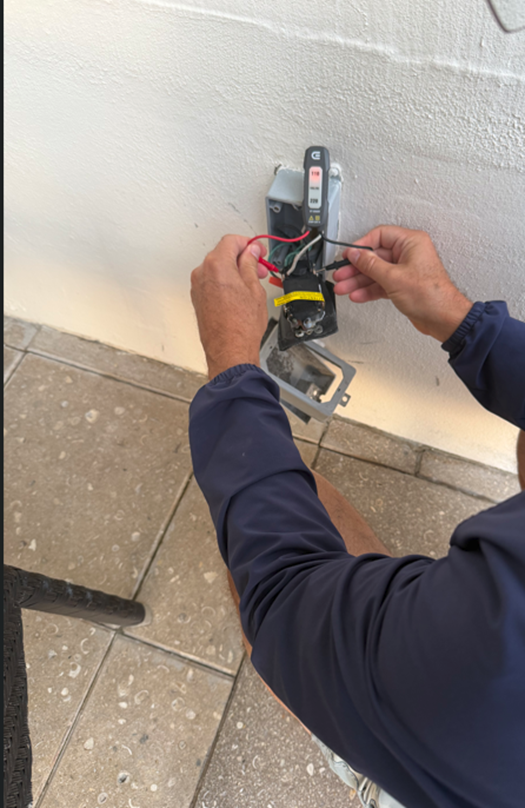
An unsecured, energized electrical box with exposed live terminals is not a maintenance inconvenience — it is an electrocution hazard. Under Florida law, the Association bears a non-delegable duty to maintain common areas in a reasonably safe condition. Failure to remedy a known electrical hazard exposes the Association — and every owner — to significant liability.
Exhibit 2 — Valet staircase handrail: disconnected and dangerous
| FALL HAZARD — EXHIBIT 2
The handrail on the valet staircase is disconnected and non-functional. A resident, guest, or vendor who reaches for this railing — as any person reasonably would — could fall. Florida Building Code Section 1014 requires handrails to be continuous, graspable, and securely anchored. This one is none of those things. Was reported and “fixed” with a zip tie. |
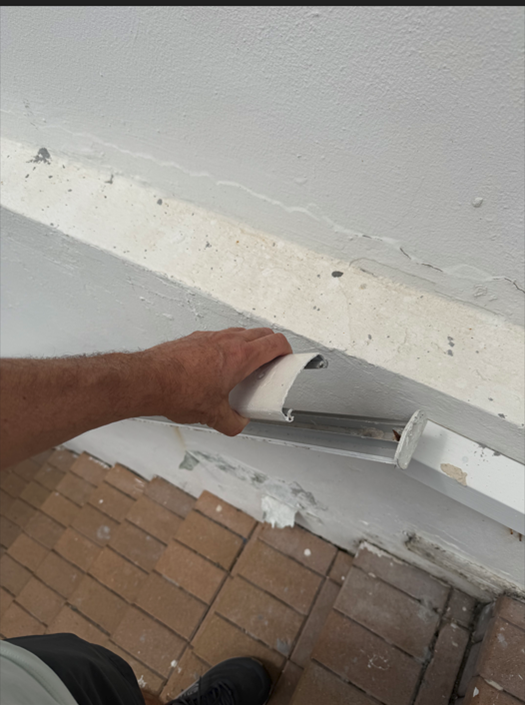
A fall on a common-area staircase, caused by a defective handrail the Association knew about, is a textbook premises liability scenario. Beyond the human cost of such an injury, the financial and reputational damage to the Association would be severe. This is precisely the kind of hazard that responsible boards fix immediately — not defer.
Exhibit 3 — Broken urinal in south men’s room: their solution was to decommission the fixture.
| DEFERRED MAINTENANCE / DECOMMISSION INSTEAD OF REPAIR — EXHIBIT 3
|
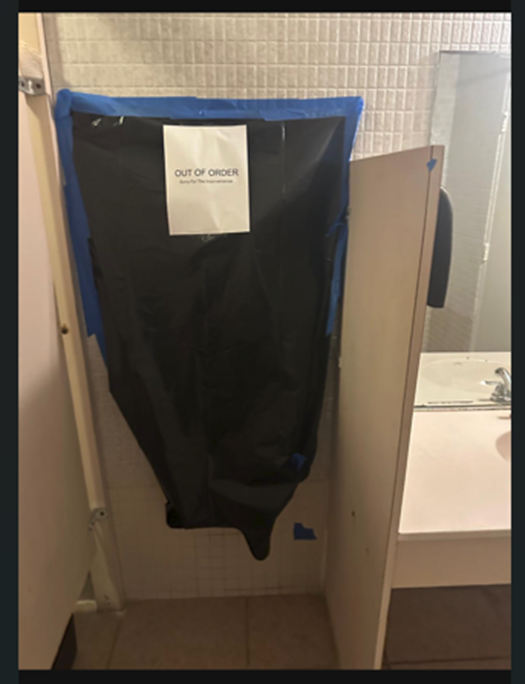
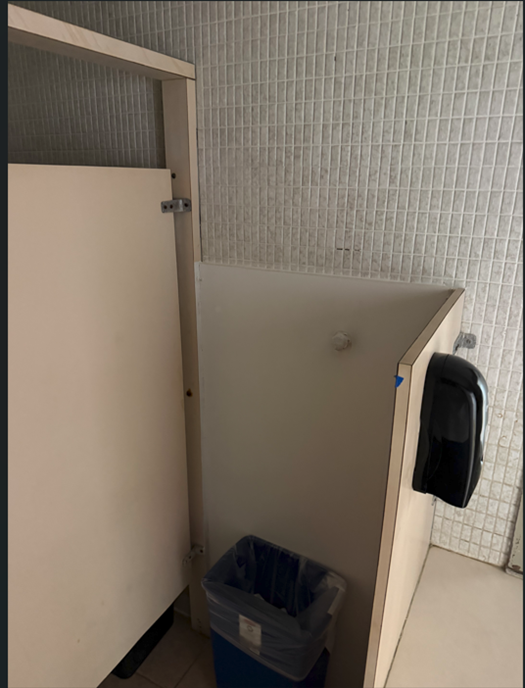 Rather than repair a broken urinal (in state depicted for over 1 year) in the south building men’s restroom (garage level), Board and management elected to decommission the fixture entirely — removing a common amenity from all residents and guests rather than spending the funds to fix it. This is not a solution. It is an abdication.
The decision to decommission a bathroom fixture rather than repair encapsulates the Board’s broader approach to maintenance: avoid spending money today at the cost of quality of life, safety, and property values tomorrow. Residents are expected to pay their assessments in full and on time. In return, they are entitled to a building maintained in accordance with the Association’s Declaration, Florida Statute §718, and basic standards of habitability.
“Rather than fix a broken urinal, they removed it from service. That tells you everything about how decisions are being made.”
A pattern, not a coincidence
These three deficiencies share a common thread: each was brought to the attention of the Board and management through proper channels. Each represents a failure of the Association’s most fundamental obligation — to maintain the common elements of this building in a safe and functioning condition. And each was met with inaction, delay, or a workaround that benefited no one but those who wished to avoid the cost of doing things correctly.
Florida Statute §718.111(1) makes clear that the Association is responsible for the operation, maintenance, and management of the condominium property. The Declaration of Condominium, Article XXI, independently obligates the Association to maintain all common elements in good repair and condition. These are not optional commitments. They are legal obligations.
| 3
Documented hazards shown here |
9+
Total deficiencies formally reported |
0
Substantive remediation responses received |
What owners can and should do
If you have observed additional maintenance failures, safety hazards, or other deficiencies in the common areas, document them with photographs and date-stamped written notice to the Board and management — delivered in a way that creates a written record. Every documented deficiency strengthens the collective case that this is a systemic failure of governance, not an isolated oversight.
Unit owners have rights under Florida Statute §718 that include the right to inspect official records, the right to petition for a special meeting, and the right to pursue legal remedies when the Association fails to fulfill its obligations. Those options remain on the table.
| Note to the Board and management: This document is a matter of public record among unit owners and may be provided to relevant authorities, including the Florida Division of Condominiums, Timeshares, and Mobile Homes, and the City of Hollywood Code Compliance Division. Residents deserve transparency, accountability, and a building that is safe to live in. That is not an unreasonable expectation. It is the law. |
This article was prepared by a concerned unit owner of Aquarius Condominium Association, Hollywood, Florida Dt. Philippe Cooper, 1603N . All factual claims are supported by photographic evidence and written correspondence on file. References: Florida Statute §718.111(1); Aquarius Declaration of Condominium, Article XXI; Florida Building Code Sections 1014 (handrails) and Chapter 27 (electrical); NFPA 70 National Electrical Code.
.o0o.


